



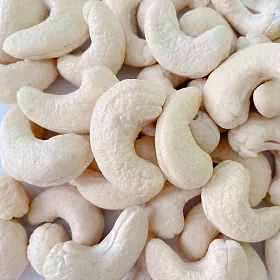
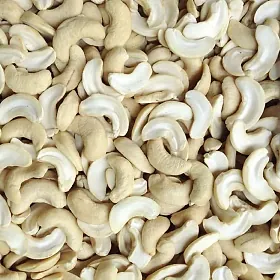
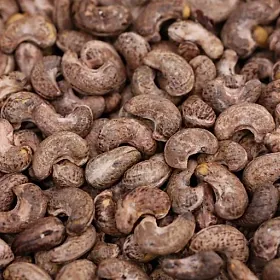
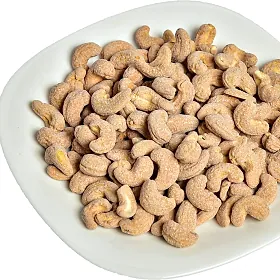
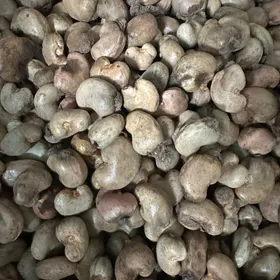



The headline industry narrative reads roughly like this: Côte d'Ivoire is producing 1.2 to 1.5 million tonnes of raw cashew per year, installed processing capacity has reached around 660,000 tonnes, kernel exports surged to around USD 625 million in 2025 making the country the world's second-largest kernel exporter, and domestic processing tripled between 2020 and 2024. Vietnam's dominance is ending. The crossover is 2030 or earlier.
I disagree with the conclusion, while accepting every number in the setup. Here is why.
The shape of the argument
Vietnam will not remain the dominant origin for raw cashew nut volume. That is already arithmetically settled. Côte d'Ivoire's raw nut production at 1.2 to 1.5 million tonnes per year compared with Vietnam's domestic production around 290,000 tonnes is not a contest. Vietnam has been a net importer of raw cashew nut for over a decade. The structural advantage is on the West African side, and the gap is widening.
What is not settled is whether processed kernel export to premium destination markets rotates from Vietnam to Côte d'Ivoire in the same period. That is a different question. Below are five reasons I think the rotation in premium kernel export is materially slower than the raw-nut shift.
Reason one — Capacity is not yield
Installed processing capacity in tonnes per year is a useful headline number. It is not the same as delivered kernel yield. Yield from raw cashew nut to first-grade kernel depends on equipment vintage, operator skill, line maintenance, and process design. The Vietnamese processing sector has built and rebuilt this yield curve over more than two decades.
Côte d'Ivoire's processing capacity ramp from roughly 103,000 tonnes processed domestically in 2020 to 344,000 tonnes in 2024 represents a substantial threefold expansion. The yield economics of a sector tripling its processing footprint in four years are different from the yield economics of a sector that has held that footprint for a generation. Some of the gap closes with time. Not all of it closes by 2030.
Reason two — Cert ecosystem density
Premium buyer markets do not just need kernels. They need kernels from facilities that hold the audit pipeline a buyer's compliance team can build a sourcing decision around. BRC v9, IFS Food, FSSC 22000, EU Organic, JAS Organic, FSMA registration. Vietnamese cashew processing has accumulated cert density over fifteen plus years; the audit history depth on individual facilities matters when a buyer is doing twelve-month forward planning.
Côte d'Ivoire's cert ecosystem is expanding rapidly but the depth gap on individual processor facilities is real. Closing this gap is not impossible — it has been done in coffee and cocoa — but it takes longer than the headline production figures suggest.
Reason three — Buyer relationship maturity
Premium destination buyers in Germany, the Netherlands, the UK, Japan, and the Gulf have done thousands of FCL allocations with Vietnamese processors. The post-rejection corrective action history, the lot-traceability response time, the QC documentation format compatibility — these accumulate as operational trust over multiple-year relationships.
A new origin entering this market has to compress that relationship maturation into compressed time. Côte d'Ivoire's premium kernel export book is growing, but the buyer-side decision to allocate a meaningful share of annual volume to a newer-relationship origin requires more time than the production data alone would suggest.
Reason four — Lead time predictability
Vietnam port-to-EU lead times have stabilised in a 30 to 45 day range across major sailings, with port operations at Ho Chi Minh City reliably predictable for FCL-volume buyers. Côte d'Ivoire's port operations at Abidjan are competent but the lead-time variance to EU destinations is materially higher, driven by routing complexity and port congestion patterns that are improving but not yet at Vietnamese-port operational consistency.
For a premium buyer running tight allocation windows, lead-time variance has a real cost that is not visible in headline freight rates.
Reason five — The trade pattern within the kernel export number
Côte d'Ivoire's USD 625 million kernel export in 2025 is impressive but the destination mix tilts toward MEA and India for the workhorse and ingredient grade segments. The premium grade volume — W210, W240 for European specialty retail, JAS-eligible kernels for Japanese specialty — remains routed predominantly through Vietnam, India, and to a lesser extent Brazil.
The trade pattern is doing what trade patterns usually do: capability ramps where the cost advantage is largest, which is workhorse and ingredient grade. Premium grade follows on a longer time curve.
The conclusion I draw
By 2027 Côte d'Ivoire will outpace Vietnam in raw cashew nut origin, which is mostly already true. By 2028 to 2030 it will substantially close the gap in workhorse and ingredient grade kernel export — W320, W450, broken grades — driven by capacity, government policy support, and improving cert pipelines.
In premium kernel export to EU specialty, Japanese specialty, and US premium private label, I do not see the rotation completing by 2030. The smart buyer position for 2027 through 2030 is dual-source: Côte d'Ivoire for cost-advantaged workhorse and ingredient grade, Vietnam for premium specification and audit-history-dependent buyer requirements.
That is the position we are building Hotanuts to serve. Not "Vietnam forever" — that is wrong. Not "Africa is overtaking" either — that is too simple.
The market is more nuanced. The buying strategy that performs well in the late 2020s reflects that nuance.
Agree? Disagree? What is your dual-source plan for 2027 through 2030? Tell me in the comments — I read all responses on industry takes.
— Tung Tran, Hotanuts