












Last updated: 2026-07-09 · 8 min read · By Tung Tran, Sourcing & Export Sales
Key takeaways
- Vietnam cashew export price averaged $7.11/kg in Q2 2026 — a 24-month high
- W180 premium leads growth at +22.3% year-over-year; W240/W320 stable; splits and BB declining
- US demand up +21.7% YTD; Singapore hub +68.8% YTD; Middle East volatile
- 55% probability of continued tightening through Q3; 35% new crop ease into Q4; 10% external shock
- Hybrid tranche procurement (40/30/30) recommended for most buyers
Table of contents
What was the Vietnam cashew price in Q2 2026?
Vietnam cashew export prices averaged $7.11 per kilogram in Q2 2026, a 24-month high. The figure represents a 13.4% gradual increase from the Q3 2024 low of $6.27/kg, driven by RCN input tightening, Vietnam factory production discipline, and post-recession demand recovery.
This is not a short-term speculative spike. Weekly customs data over 24 months shows a stepped, sustained rise rather than a bubble-style gap.
Three-phase view:
| Period | Avg price (USD/kg) | Characteristics |
|---|---|---|
| Q3 2024 | 6.27 | Cycle low, high global inventory |
| 2025 | 6.50 – 6.85 | Gradual recovery, US retail demand returning |
| Q2 2026 | 7.11 | 24-month high; Africa RCN tightening + VN discipline |
Source: Vietnam Customs Q2 2026 export report (2026-06).
The $7.11/kg figure is a pooled W240/W320 benchmark. Actual price for your order depends on specific grade, shipment window, and Incoterms.
Why are Vietnam cashew prices rising in 2026?
Four factors converge to lift prices: African RCN input supply tightened, Vietnam factories exercised production discipline, global demand recovered from the 2023–2024 recession, and container freight rates normalized after pandemic-era disruption. The rise represents a sustainable trend, not a speculative spike.
1. African RCN supply tightening. H1 2026 Ivory Coast auction prices ran 8–12% above the same period in 2025. Ghana and Nigeria harvests underperformed expectations due to weather and low carryover stock.
2. Vietnam factory discipline. After the 2023–2024 high-inventory phase, factories in Bình Phước, Long An, and Đồng Nai chose volume control over price competition. This preserves margin across the chain.
3. Global retail demand recovery. Consumer confidence indices in the US and EU improved from Q4 2025 onward. Premium retail channels (Middle East, Japan) resumed standard import schedules.
4. Container freight normalization. Vietnam → Rotterdam stabilized at USD 2,800–3,200 per 40ft; Vietnam → Jebel Ali (UAE) at USD 1,600–1,900. Uncertainty premiums from 2021–2022 have faded.
Which cashew grade shows the strongest price growth?
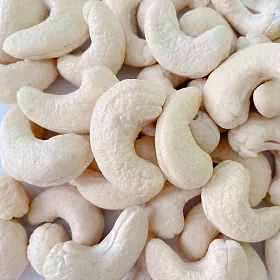
W180 premium whole kernels lead the market with +22.3% year-over-year growth, driven by retail premium demand from Turkey, Israel and Middle East markets. Standard W240 and W320 remain stable, while by-products like LP, SP and BB show declining prices — creating opportunity for packaged food manufacturers.
Q2 2026 grade-level movement:
| Grade | Reference price (USD/kg) | Δ YoY | Primary channel |
|---|---|---|---|
| W180 | 9.80 – 10.50 | +22.3% | Premium retail ME, Japan, Israel |
| W240 | 7.20 – 7.60 | +5.1% | Mainstream retail EU, US, Japan |
| W320 | 6.40 – 6.80 | +3.2% | Industrial, China retail |
| W450 | 5.80 – 6.10 | +1.8% | Bakery, confectionary |
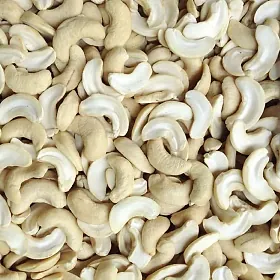
| LP (Large Piece) | 4.60 – 4.90 | –4.5% | Nut butter, ice cream inclusion |
| SP + BB | 3.20 – 3.80 | –6.2% | Industrial filler |
Source: VINACAS 2026 mid-year report + broker data 2026-06.
Buyers can exploit the spread: keep W180 for flagship retail lines, shift industrial volume to WS + LP mix for cost optimization. For nut butter and confectionary, LP+SP+BB now offers a clear buying window.
Which regions are driving cashew import demand in 2026?
US demand grew +21.7% year-to-date, Singapore surged +68.8% as a re-export hub, China remains the stable dominant importer, Europe softens marginally, and Middle East shows volatility with a +82% month-over-month rebound in June 2026.
Five-region view:
- United States (+21.7% YTD) — retail demand rebounding strongly; W240 is the workhorse grade; Q4 season (Thanksgiving, Christmas) driving increased pre-orders.
- Singapore (+68.8% YTD) — Southeast Asian re-export hub role expanding sharply; significant onward shipments to Middle East, India, Bangladesh.
- China — stable import volumes; Vietnam–China land routes gaining share; W320 dominates by volume.
- European Union — marginal softening; existing inventory prioritized; BRC and MRL testing requirements continuing to tighten.
- Middle East — high volatility with June 2026 +82% MoM rebound; Tin packing dominant; UAE serves as primary distribution hub.
Signal for sourcing teams: Singapore hub growth means the Southeast Asian supply chain is restructuring — buyers should consider direct Vietnam sourcing rather than SG intermediary, potentially saving 4–7% on landed cost.
What should buyers do in Q3–Q4 2026?
For most buyers with 6+ FCL annual volume and stable cash flow, a hybrid tranche approach (40% lock now, 30% mid-Q3, 30% Q4) balances price protection with new crop upside. Pure lock or pure wait strategies suit specific edge cases only.
Three action scenarios:
Scenario A — Lock 100% now (roughly 20% of buyers): appropriate when volume exceeds 20 FCL/year, cash flow is stable, and you need to lock margin against forward retail commitments. Structure: forward contract T/T 30/70, grade and shipment window fixed for Q3–Q4.
Scenario B — Wait 100% spot (roughly 15% of buyers): only reasonable when volume is under 3 FCL/year and you have 60+ day warehouse buffer. Risk: if Q3 tightens further, cost may rise 5–8%.
Scenario C — Hybrid 40/30/30 (roughly 65% of buyers): lock 40% now as tranche 1, execute 30% when RCN signals ease mid-Q3, remaining 30% into Q4 new crop. Specific trigger points: RCN drop 5% week-over-week → activate tranche 2; Vietnam new crop cargo ready → tranche 3.
Regardless of scenario, monitor three signals weekly: African RCN auction prices, Vietnam kernel broker sentiment, and Vietnam-to-destination container freight rates.
What is the Q3–Q4 2026 outlook?
Three scenarios weighted: continued tightening at 55% probability (prices hold or drift up 3–5%), new crop ease at 35% probability (prices soften 5–8% into Q4), and external shock at 10% — low probability but high impact. Buyers should prepare responses for all three, not trade against a single assumption.
Scenario 1 — Continued tightening (55%): African RCN remains constrained, Q4 seasonal demand peaks. W240 may touch USD 7.60–7.80/kg by late Q3. Buyers who have not locked should activate tranche 2 early.
Scenario 2 — Ease at new crop (35%): Vietnam cargo arrives October–November, prices soften 5–8%. Buyers who locked 40% at tranche 1 remain fine — blended margin balances. Spot-waiting buyers get favorable entry.
Scenario 3 — External shock (10% — low probability, high impact): examples include Red Sea logistics disruption, cashew crop disease, sudden tariff changes. Not predictable, but buyers should maintain backup supplier lists and 30-day inventory buffer.
Bottom line: the Q3–Q4 2026 market sits at an inflection point. Data-driven decisions matter more than sentiment.
Glossary
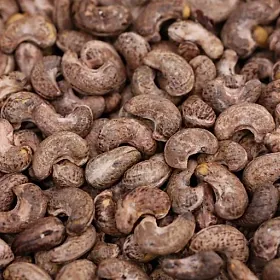
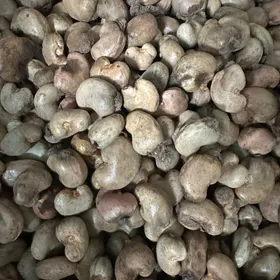
RCN — Raw Cashew Nuts, unshelled cashew fruit imported from Africa (Ivory Coast, Ghana, Nigeria) and Cambodia for Vietnam processing.
W180 / W240 / W320 / W450 — Whole cashew kernel grades under the AFI standard (last revised 28 July 2016); the number is the kernel count per pound. W180 = 140–180 nuts/lb, also coded SLW (premium); W240 = 220–240 nuts/lb (mainstream retail); W320 = 300–320 nuts/lb (bulk); W450 = 400–450 nuts/lb.
FCL — Full Container Load, standard shipping unit typically holding 20,000 kg of cashew kernels in vacuum-packed cartons.
YTD — Year To Date, cumulative from January 1 to reporting date (here, through June 2026).
Tranche — A portion of total procurement volume executed at a specific time, allowing price averaging across multiple purchase moments.
Frequently Asked Questions
What was the Vietnam cashew price in Q2 2026?
Vietnam cashew export prices averaged $7.11/kg in Q2 2026, a 24-month high driven by RCN tightening and demand recovery. The figure represents a 13.4% gradual increase from the Q3 2024 low of $6.27/kg.
Why are Vietnam cashew prices rising in 2026?
Four factors converge: African raw cashew nut supply tightening, Vietnam factories exercising production discipline, global demand recovering post-recession, and container freight rates normalizing after 2021–2023 disruption. Together they support a sustainable price floor rather than a speculative spike.
Which cashew grade shows the strongest price growth?
W180 premium whole kernels lead the market with +22.3% year-over-year growth, driven by retail premium demand from Turkey, Israel and Middle East markets. Standard W240 and W320 remain stable, while by-products like LP, SP and BB show declining prices.
Should buyers lock in cashew contracts now or wait?
The market is at an inflection point — probability weights suggest 55% continued tightening, 35% new crop ease and 10% external shock. Most procurement teams with 6+ FCL annual volume benefit from a hybrid tranche strategy (40/30/30 split across Q3–Q4) rather than locking 100% now or waiting entirely for spot.
Which regions are driving cashew import demand in 2026?
US demand grew +21.7% YTD, Singapore surged +68.8% as a re-export hub, China remains stable dominant, Europe softens marginally, and Middle East shows a +82% MoM rebound in June 2026. The pattern signals a shift toward premium retail markets.
Last updated: 2026-07-09 · HotaNuts refreshes market intelligence quarterly.
Next steps:
- Download the Q3–Q4 procurement checklist (free PDF, coming soon)
- Read Article 2: Cashew Grade Guide — W180 to BB explained (publishing 2026-07-29)
- Talk to the HotaNuts sourcing team: Contact us