

Aflatoxin is the contaminant most likely to keep a food-safety professional awake at night. It is a heat-stable, naturally-occurring mycotoxin that does not break down during normal roasting or cooking. A single rejected container can erase a year's margin on a mid-sized cashew allocation.
The good news for cashew buyers: structurally, cashew kernels carry a substantially lower aflatoxin notification profile than several adjacent tree nuts. The hard data lives in the EU Rapid Alert System for Food and Feed.
The current EU regulatory framework
The maximum levels for aflatoxin in nuts and dried fruit intended for direct human consumption are set by EU Regulation 2023/915, which replaced the previous Regulation 1881/2006. The headline values for nuts in this category:
- Aflatoxin B1: below 2 micrograms per kilogram (μg/kg or ppb)
- Total aflatoxins (B1 + B2 + G1 + G2): below 4 micrograms per kilogram
For nuts intended for further processing before being placed on the market for human consumption, slightly higher tolerances apply. Operators should confirm which limit applies to their specific product placement.
The regulation is the binding floor across the EU single market. Some private buyer specifications require tighter internal limits; some destination markets outside the EU set different national limits (notably Japan and the Gulf states). The EU figures are the minimum compliance baseline for placement on the EU market.
What RASFF data shows for cashew specifically
The EU Rapid Alert System for Food and Feed (RASFF) is the public database of EU border notifications for food safety incidents. Peer-reviewed analysis of RASFF aflatoxin data covering 2010-2023 shows a clear ranking among tree nuts by notification frequency.
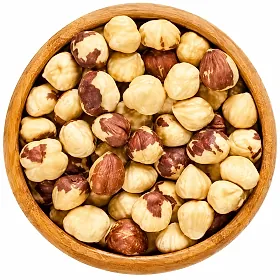
Cashew kernels recorded fewer than ten aflatoxin notifications across the full 2010-2023 period — substantially fewer than pistachios, almonds, or hazelnuts over the same window. The structural reasons appear to be a combination of cashew kernel processing methods (steam conditioning before cracking creates an internal heat exposure that suppresses some fungal growth), kernel moisture profile, and post-cracking storage practices in the major exporting countries.
This is not zero risk. It is empirical evidence that cashew sits structurally lower on the aflatoxin notification curve than several products buyers may benchmark against.
How aflatoxin gets into a cashew lot
Two organisms account for the vast majority of cashew aflatoxin events: Aspergillus flavus and Aspergillus parasiticus. They are widespread environmental fungi. The conditions that allow them to produce aflatoxin at material levels are well-characterised:
- Warm temperatures (28-32°C is the productive sweet spot)
- High humidity (water activity above approximately 0.85)
- Kernel surface integrity loss during cracking or shelling
- Extended exposure at the wrong moisture during drying or storage
In practice this means most contamination events trace to specific points in the post-harvest chain: prolonged on-farm drying under inadequate covering, post-cracking storage in unmanaged moisture conditions, or shipping containers that experience condensation cycles in transit.
Aflatoxin once formed is stable to normal cooking temperatures and roasting times. You cannot roast it out. Prevention is the only effective control.
What a supplier-side QC pipeline looks like in practice
A defensible supplier-side cashew QC pipeline against aflatoxin involves several layers:
- Raw cashew nut moisture management — target moisture below 6% before storage, monitored at delivery
- Drying tunnel conditions — controlled-environment drying after cracking, target kernel moisture ≤ 5%
- Per-lot sampling — composite sampling per the methodology in Codex STAN 131 or equivalent
- ELISA screening — rapid quantitative screen for aflatoxin B1 at the lot release stage
- HPLC confirmation — gold-standard chromatographic confirmation for any lot showing elevated screening result
- Third-party verification on buyer request — Pre-Shipment Inspection through SGS, Intertek, or Bureau Veritas, sample drawn from the same production lot
Buyers placing on the EU market should expect to see at least the ELISA screen documented per lot in supplier records, with HPLC confirmation available on request. Third-party PSI is the additional layer most commonly added for first-time supplier engagements or for lots above a contract-defined volume threshold.
What buyers can ask before next allocation
Three questions a buyer can ask any cashew supplier before confirming next allocation:
- What is your in-house aflatoxin screening method, and at what stage in the production line do you sample? Acceptable answers identify ELISA at lot release with HPLC available on request.
- What was your aflatoxin RASFF notification history in the last five years? Acceptable answers either state zero notifications or describe specific events with corrective action documented.
- Will you accept third-party PSI through a buyer-nominated lab on this lot, at buyer cost? Acceptable answers say yes, with the standard caveat that sample selection follows a documented protocol.
Suppliers that decline question three should be approached with caution for first-time engagements.
Where Hotanuts stands
Our processing partner factory operates a documented per-lot QC pipeline aligned with the framework above, with screening and confirmation methods consistent with EU buyer expectations. We support third-party PSI on first-time engagements as a standard offering, not a negotiation point. The QC SOP documentation is available under NDA at the RFQ stage for buyers who want to verify before sample order.
Request a sample QC report — anonymised real lot from a recent shipment, redacted only on buyer-identifying fields.