



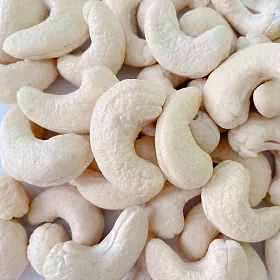
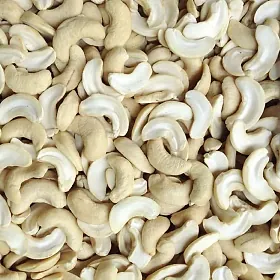
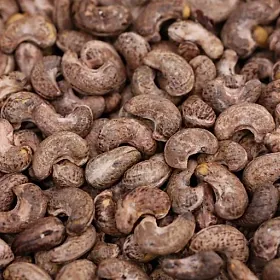
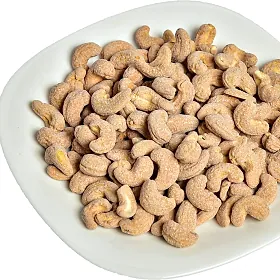
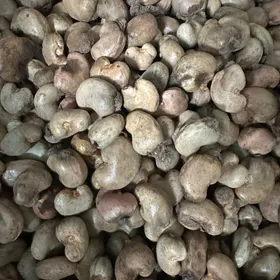

The grade on your cashew contract — W240, W320, W450, LP — is not just a kernel-size designation. It signals which buyer segment your supplier thinks you are. Pick the wrong grade for your end use and you either pay a premium you do not need, or accept a yield gap that costs you more in processing downstream.
This is the AFI-aligned decoder, mapped to buyer profiles we work with.
How the grading system works
Vietnamese cashew kernel grading follows the AFI (Association of Food Industries) standard, with several revisions of which the AFI 2016 specification is the version most buyers currently reference. The Hotanuts knowledge base contains the digitised AFI 1999, 2012, and 2016 versions in both English and Vietnamese for reference.
The "W" prefix denotes wholes (intact kernels). The number that follows is the approximate kernel count per pound. A higher number means smaller individual kernels and more pieces per unit weight.
A separate set of designations covers broken kernels: LWP (large white pieces), SWP (small white pieces), BB (baby bits), and increasingly fine fragments down to cashew meal.
The five wholes grades and their buyer-side profiles
W180 — large kernels, premium retail
Approximately 170-180 kernels per pound. The largest standard kernel grade widely available. Selected by Japanese specialty retailers, premium snack brands using bare-roast presentation, and EU gift-box producers where individual kernel size is a visual selling point.
Yield from raw cashew nut is structurally lower at this grade, which is the primary driver of the price premium.
W210 — large-mid, premium snack
Approximately 200-210 kernels per pound. Workhorse for upper-tier snack brands that want a visible-size premium without the W180 cost step. Also common in gift baskets and dried-fruit-and-nut mixes where kernel uniformity matters more than the absolute largest size.
W240 — mid-premium, organic and clean-label retail
Approximately 220-240 kernels per pound. The most common grade requested by European organic snack brands and US clean-label private-label operators. Pairs well with BRC v9 cert and EU Organic certification on the supplier side. Strong fit for buyers who want a visible quality story without paying for W180.
W320 — global workhorse
Approximately 300-320 kernels per pound. This is the most-traded cashew kernel grade globally by significant margin. Buyer profiles span:
- US private-label brands sourcing for grocery distribution
- European mid-market retailers for in-house snack lines
- UAE and Saudi re-exporters building regional distribution
- Industrial buyers for bake-in or coated-nut applications
If you are starting a new SKU and do not have a specific reason to deviate, W320 is the default conversation. Most quote-engine and lead-time defaults assume W320.
W450 — small-kernel, ingredient and industrial
Approximately 400-450 kernels per pound. Selected by industrial roasters, bakery ingredient buyers, and butter and paste producers where the individual kernel size is not visible in the finished product. The yield curve favours W450 from many raw cashew origins, making this grade the cost-efficient choice when end-use does not demand visible size.
The broken kernel grades
When kernel size is irrelevant in the finished product, broken grades offer significant cost advantages with no loss of food value:
- LWP — large white pieces, suitable for chunky butter and inclusion in granola
- SWP — small white pieces, common in coated-nut mixes and chocolate inclusions
- BB — baby bits, used in confectionery and ingredient applications
- Cashew meal — finely ground, used in vegan dairy alternatives and bakery
Pricing on broken grades runs significantly below whole grades. For ingredient and inclusion applications, the cost-per-protein-output calculation often favours broken grades meaningfully.
A decision walk-through
If you are sourcing for a finished product where the cashew is visible (snack mix, gift box, bare-roast pack), start at W240 or W320 and step up to W210 or W180 only if your retail price point justifies it.
If you are sourcing for a finished product where the cashew is incorporated (butter, paste, bakery inclusion, milk alternative), start at LWP or SWP and step up to W450 whole only if your processing line requires intact kernels.
If you are sourcing for multiple SKUs across both visible and incorporated uses, splitting a single allocation across two grades from the same supplier reduces purchasing complexity and often unlocks volume tier pricing on the combined order.
What changes across buyer regions
Regional buyer profiles tilt the default grade conversation:
- EU organic and specialty retail — W240 dominant, W320 secondary, BRC v9 mandatory
- EU industrial bakery — W450 and broken grades dominant
- Japan specialty retail — W180 and W210 dominant, JAS organic strongly preferred
- UAE / Saudi re-export — W320 dominant, Halal mandatory
- US private label — W320 dominant, FSMA-compliant facility required
- US ingredient industrial — broken grades dominant, FDA-registered facility required
A short note on tolerance
Every AFI grade has a published tolerance: a percentage of the lot that may fall outside the headline kernel-count range. The 2016 specification tightened tolerances versus the 2012 version (notably for Grade 1 defects). A buyer who quotes "W320 AFI-2016" is signalling expectation of the tighter tolerance; a buyer who quotes only "W320" without version reference may end up with material under 2012 tolerances.
If your contracts pre-date 2016 or do not specify a version, this is worth a single-line addition at next renewal.
Download grade-specific spec sheets — W180, W210, W240, W320, W450, LWP, SWP, BB (8 PDFs, packaged as one zip).